

Navigating the Tangle Tax, When Casting a Double Nymph Rig
- luckystripsflyco
- Oct 15
- 6 min read


Hey everyone, Matt here with Lucky Strips Fly Co. I wanted to give another quick check in and provide thought into casting a double nymph rig and share tips that I have found productive in casting these rigs. On our guided float trips throughout the course of the year a double nymph rig is one of our most widely used tactics, whether placed under a standard indicator or under a large hopper. The double nymph rig is referring to taking a nymph (aquatic insect), imitating a fly and placing it under an indicator, with the intent for clean drag free drifts in productive water. If the thought of casting a non-aerodynamic plastic/cork indicator along with a tungsten beaded nymph doesn’t sound like a recipe for tangles, we add a second tungsten beaded nymph to make it more of a challenge.
Despite the added challenge that can be created when adding two tungsten beaded nymphs with varying masses, these rigs can be very productive when surveying water for trout, especially if you are not familiar with what the trout are keyed in on. The double nymph rig allows great opportunity to survey two different flies, whether it be comparing and surveying two different colors, or two different types of bugs, or attractor vs natural patterns. These double nymph rigs allow for diversity in your approach when fishing and is the main advantage in why I use them on our trips. Through this process and utilization of this tactic I have been able to take time on the water and test the comparison of many variables in fly design looking to find if X works better than Y. I’ve also taken time in comparing profiles between similar bugs to see if one profile is more productive than another, even when attempting to replicate the same nymph. There are countless amounts of flies on the market that imitate a mayfly, some may be more productive than others in certain waters, or certain water conditions. Fly designs can vary in functionality with altering weight, profile, and color. Some patterns have very realistic features embedded in the fly like a specific amount of tailing fibers splayed out nice and geometric like seen on the natural bug, some have flash back, or split cases simulating the process of an aquatic bug emerging into its natural adult insect form. Other flies being used to imitate nymphs are merely dubbing on a hook or thread on a hook. The double nymph rig really allows versatility in your approach to picking apart trout in these waterways. It can promote thought provoking insight in how you want to dissect the water you are preparing to fish.

However, with this luxury of throwing two flies comes a large tax. The tax of tangling your whole rig and having to take time and attempt to pick it apart or snip and retie while salvaging as much of your rig as possible. This riverside nightmare can be mitigated with several practices outlined in this article.
One way to mitigate the taxation of tangling, and arguably the main avoidance is the ability to build space in the loop of your cast. We always hear about tight loops and see those infamous fast false casts with bright colored fly lines cutting through the air. The reality of that when running a double nymph rig just isn’t there. It is a recipe for less fishing and more knot tying. I like to explain to clients in the boat the need to slow down and be deliberate with your cast, open that loop up and allow our flies to have time to travel and taper out on both the back cast and forward cast. Ideally we want our flies to land away from our indicator. Preferably flies first separated apart from each other, then indicator, then leader and fly line. More often than not through a rushed cast, (quick and reactive) we are hoping it all gets there and we end up seeing everything land in one spot. Flies come crashing in the water, indicator lands with a big splat and the whole rig is piled on top of itself. A viable way to fix this common issue is to take and lift your rod tip as your rig is approaching the water, this will force that rig to taper out and help kick that line back allowing all parts of the rig to space out as they approach the water. Almost like you are dragging the flies back and into the water. It is just a slight rod tip lift and timing is key but it can be a great viable trick to have in the arsenal and to keep you fishing longer.
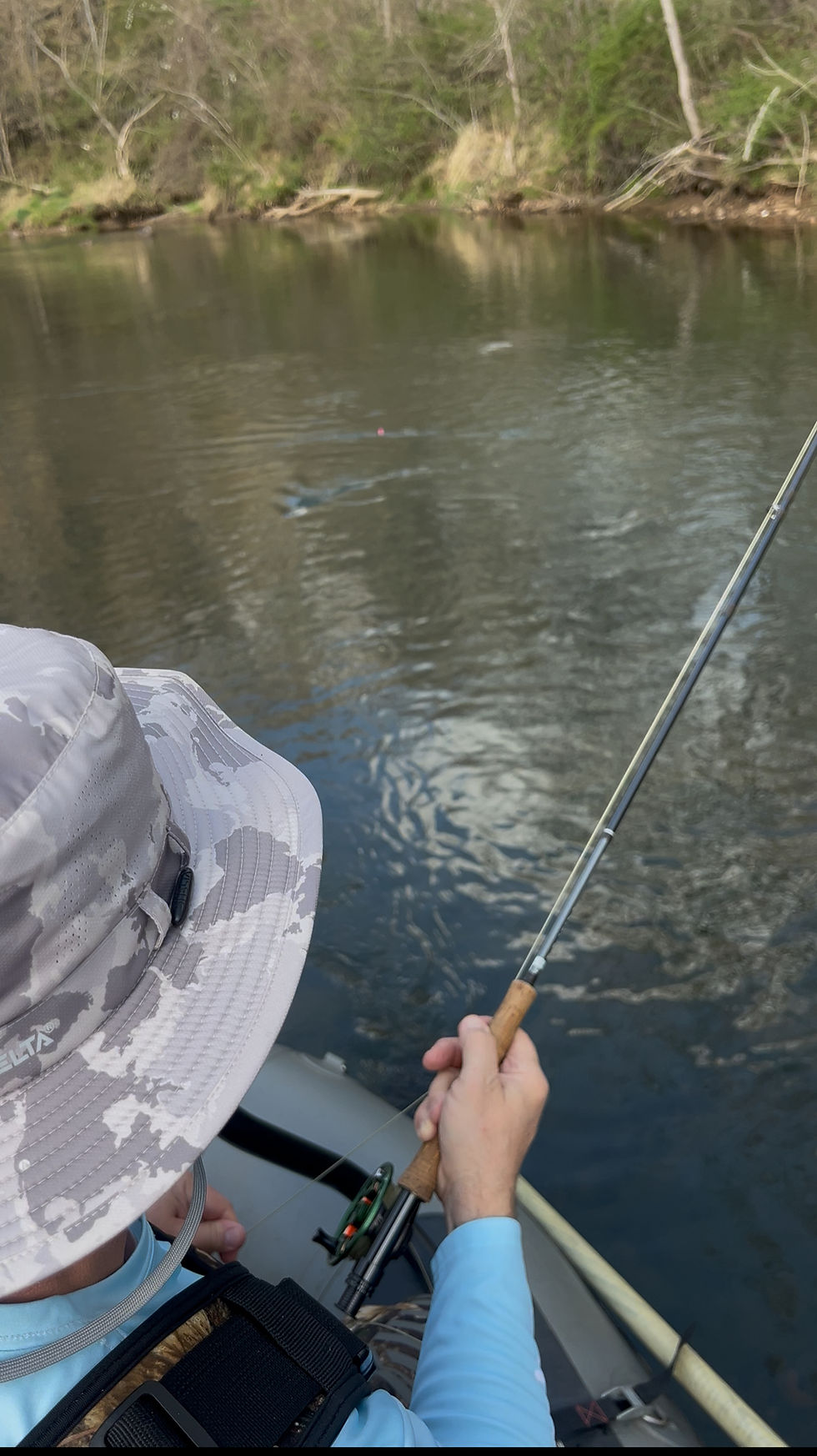
Over time you can gain a good sense of an appropriate cast simply by watching the way it hits the water. Do you see a small impression on the water where your flies hit, followed by a fully tapered out leader with indicator away from that initial entry of the flies. I like to think of using my arm as an extension of my cast and use that to build that space within that cast. Using my arm to lift and draw that cast out nice and slow. I can still be forceful while being slower. Timing of the force is key. This also applies to using a “water load” cast. Where we take and let the water load our lines tight and use that tension to our advantage and all at once with momentum pick everything up and cast it up stream. Taking the rod and tracking all the line into a large open loop and applying directional force toward our intended target upstream.
The key in any cast when running two nymphs is having them up in the water column before attempting to cast them. With common occurrence I see people attempt to cast with their flies still underwater with relative depth. Flies with tungsten beads are meant to sink with a very high efficiency, when given the opportunity they will. So before we cast we need to use the rod to lift those flies and elevate them in the water column and free up that rig to be recast. It is super tough to cast while flies are down and when we attempt to do so we are losing energy delegated for our cast from the depth and friction of our flies travelling through the water first, resulting in less energy for our cast to develop towards its intended target and increasing the risk of the tangle tax.
Understand also, less fly line can be more productive. Often I see people going for that long hero cast to the far bank, because “it looks so fishy”, “that has to hold a fish” all while skipping over the main run attempting to hit the bank and ultimately hanging in a tree or wrapped all around itself and we have to retrieve our flies with shame and begin the recovery process in efforts to get back in the water fishing. With less line the energy delegated for our cast can travel more effectively through that fly line into the leader through the indicator and carry our flies. Understand that if I am looking for a further cast I will need to provide corresponding energy to make that happen. Typically when going for that long cast the flies don’t make it as far as we were hoping as they are weighted and gravity brings them crashing to the surface of the water. That long cast must also be able to support the non-aerodynamic flight of an indicator.

This paired with the thought process of the function of the double nymph rig tactic is to survey positive water and put those nymphs in that “nutrient highway”, foam is home, fast seam/slow seam. When looking at hitting the banks or tight to structure you are often now fighting varying currents thus having to mend much more or having your flies being blown out and not fished in the manner in which the trout are feeding on them. Quite counter intuitive to the whole reason we are using a double nymph rig. Don’t get me wrong here in thinking there isn't merit to a double nymph rig tapering out under an overhanging shrub 2 ft from the water's surface with a smooth current carrying it into a log jam. Yes, I agree that would be a great place to toss a double nymph rig.
However, we could also look at the current and see if we can find a seam of water that brushes into the main current heading into that log jam. Throwing upstream and allowing it to float and navigate those currents ultimately heading into our destination.
Fall fishing is here, what a great time to get out and fish it hard! A few open dates left in Oct. with several available weekend dates into Nov.
Oct. 26th
Nov. 15, 16, 22, 23, 29, 30
Reach out via email, text, phone call, or website booking
276-732-0517


Comments